
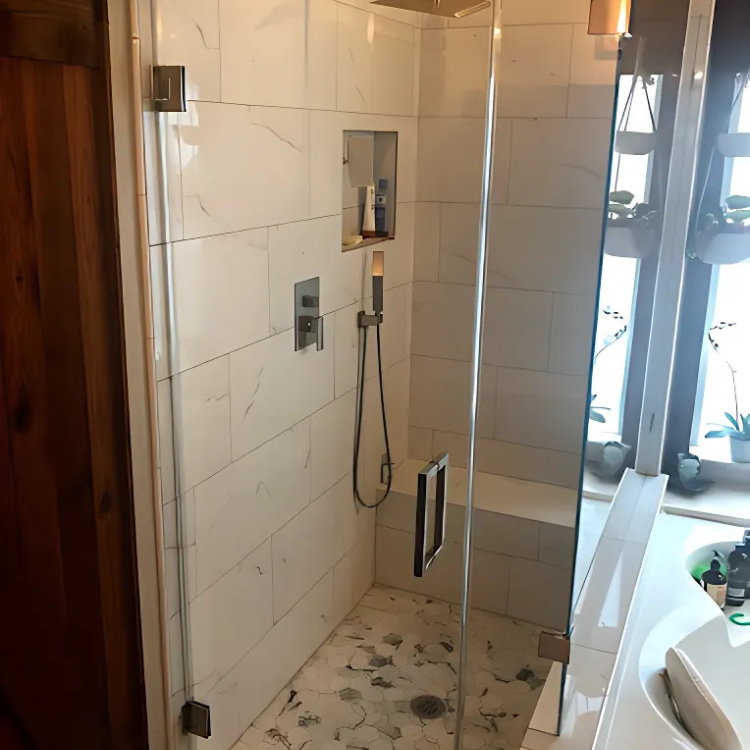
Frameless Shower Doors That Showcase Tile Artistry
On any given weekend in Austin, you can walk through a new-build home in East Austin or a high-rise condo downtown and see the same trend repeating: stunning, custom tile work in the shower — and a plain, bulky shower frame cutting right across it.
With what homeowners now invest in artisan tile, specialty stone, and thoughtful layouts, hiding that artistry behind metal and frosted glass is a missed opportunity. Frameless glass has become the preferred way to let that design shine, especially in design-forward markets like Austin, where resale value and visual impact matter. A recent remodeling survey found that upgraded bathrooms can return up to 60–70% of their cost at resale, and buyers consistently rank luxurious showers near the top of their wish lists.
This guide walks through how frameless shower doors highlight tile artistry, what design choices work best, how they compare to traditional options, and what Austin homeowners should know before starting a project. You’ll also see real local examples and practical tips from the field.
Key Insight: Thoughtful frameless design doesn’t just enclose a shower — it becomes an invisible frame that spotlights your tile as the centerpiece of the bathroom.
Why Frameless Glass Is the Perfect “Frame” for Tile Art
Tile is often the most expressive element in a bathroom. Intricate mosaics, patterned encaustic tiles from local shops, or large-format marble-look porcelain all tell a story. Thick metal frames and busy hardware can interrupt that story.
Frameless Frameless Shower Doors use heavy, tempered glass with minimal metal so the eye travels across the entire shower without visual breaks. This is especially powerful in Austin homes where:
- Designers are using statement walls in walk-in showers
- Builders are investing in custom niche layouts and bench details
- Homeowners are mixing textures — matte, glossy, patterned, and stone
“Glass should disappear so the tile can speak for itself.” — Senior Designer, Austin Custom Remodeler
A recent project in Circle C is a good example. The homeowners had invested in a herringbone marble mosaic on the back wall of a walk-in shower. Their original plan called for a semi-frameless slider. Once they saw a mock-up with a frameless hinged door instead, they immediately noticed how much more continuous the herringbone looked. The door now swings off a single vertical hinge, and the rest of the glass reads like air — the tile takes center stage.
Design Strategies That Showcase Your Tile (Not the Hardware)
To really spotlight tile artistry, every design decision around the glass matters: door type, hardware finish, and even how the panels line up with grout joints.
Choose the Right Door Style
Different door styles interact with tile in different ways:
- Hinged Shower Doors / Pivot Shower Doors
A single pivot or hinged panel creates the cleanest sightline. With frameless Shower Enclosures, the hardware is minimal and positioned to avoid cutting across focal tiles.
- Sliding Shower Doors
Modern Sliding Shower Doors use sleeker tracks and exposed rollers, which can still keep the focus on tile, especially in tight Austin bathrooms where a swing door isn’t practical.
- Corner Shower Enclosures / Neo Angle Shower Doors
These are common in suburban Austin homes where space is at a premium. Clean, mitered corners and clear glass can make a small, angled shower feel like a crystal box showcasing your tile.
A remodel in a Mueller townhouse shows how subtle choices matter. The homeowner used a bold, geometric cement tile on the main shower wall. We designed a frameless pivot door with the hinge anchored on the opposite side of that feature wall. Result: the door swings open without breaking the view of the pattern, and all hardware sits on the more neutral wall.
Align Glass with Tile Layout
When possible, we coordinate vertical glass edges with grout lines. This small detail makes the whole shower feel custom and visually calm.
“Aligning glass edges with tile joints is one of the simplest ways to make a bathroom feel architect-designed.” — Lead Installer, Shower Doors of Austin
Frameless vs. Traditional: How They Compare for Tile-Forward Bathrooms
Framed and semi-frameless systems still have their place, but for tile artistry, they perform differently than true frameless glass. Here’s how they stack up in a typical Austin bath remodel:
Visual and Practical Differences
| Feature | Traditional Framed Doors | True Frameless Glass Shower Doors |
|---|---|---|
| Metal around glass | Full perimeter frame | Minimal – mostly hinges and small clips |
| Impact on tile visibility | Breaks up patterns and focal walls | Clear, uninterrupted view of tile |
| Ease of cleaning | More crevices, potential for mildew | Fewer joints, smoother surfaces |
| Customization for complex layouts | More limited | Highly flexible for niches, benches, angles |
| Perceived luxury / resale appeal | Standard / builder-grade | High-end, spa-like, strong buyer appeal |
| Typical cost range in Austin | Lower upfront | Higher upfront, stronger design impact |
\Actual costs vary by size, hardware, and glass options.
In a Westlake renovation, a homeowner initially requested semi-frameless doors to save on budget. Their shower featured a full-height porcelain slab with dramatic veining. When we mocked up both options, the framed version cut the veining into segments, while frameless glass allowed the vein to flow unbroken from floor to ceiling. They chose frameless, seeing it as “insurance” that the expensive tile would read the way it was intended.
Balancing Budget and Impact
For some clients, we’ll use a hybrid approach:
- Frameless fixed panels with a semi-frameless door
- Clear frameless on the main feature wall, with more economical solutions on less visible sides
If your project includes other glass elements — such as Custom Mirrors or Custom Interior Glass room dividers — we can design everything together so your investment in glass works hard across the entire space.
Glass Options, Clarity, and How They Affect Your Tile Colors
Not all glass is created equal, especially when you care about how your tile reads in real life. Color, brightness, and depth can shift depending on the glass you choose.
Clear vs. Low-Iron Glass
Standard tempered glass has a slight green tint, most noticeable on thicker panels and against white or light-colored tile. For many projects, that tint is subtle. But when you’ve selected a crisp white subway tile or pale terrazzo, low-iron glass can be worth considering.
Low-iron glass:
- Reduces the green cast
- Keeps whites brighter and truer
- Shows off subtle tile veining and texture more accurately
In a central Austin bungalow, the homeowners used handmade white subway tile with a warm, off-white grout. When we held standard glass up against a sample board, the tile picked up a cooler, greenish tone. Low-iron glass preserved the warmth they wanted, especially under the soft LED vanity lighting.
“Low-iron glass is like switching from regular TV to HD for your tile.” — Austin Interior Designer, Residential Focus
Finishes and Privacy
If privacy is a concern, especially in primary suites with large windows, there are options that still respect your tile:
- Clear glass on the main feature wall with a frosted band only at eye level
- Lightly patterned or textured glass on one side while keeping the focal wall fully clear
- Strategic use of Custom Etched Glass to create artful privacy bands that complement your tile design
Planning the Whole Bathroom: Mirrors, Glass, and Architectural Flow
A shower never exists in isolation. The way your glass shower interacts with mirrors, windows, and even stair railings can make your tile feel more prominent — or lost.
Using Mirrors to Extend Your Tile Visually
Thoughtfully placed Custom Mirrors can:
- Reflect your shower feature wall from the vanity
- Make a smaller bath feel larger and brighter
- Double the visual impact of a special mosaic or niche detail
In a Zilker-area remodel, the shower’s feature wall couldn’t be seen from the doorway. We installed a wide, custom-cut mirror above the vanity opposite the shower. Now, the first thing you see walking in is the reflection of the tile, framed by the mirror and unobstructed by bulky glass.
Coordinating Glass Throughout the Home
Austin homes often mix indoor-outdoor living, open stairs, and flexible workspaces. Coordinated glass can tie it all together:
- Stair Rail Glass that echoes the minimal hardware of your shower
- Custom Glass Table Tops that reflect the same clean edges and finishes
- Cabinet Glass doors with similar clarity and hardware tones
“Repeating glass details — same hinge finish, similar edge profiles — creates a sense of calm and cohesion that buyers can’t always explain, but they feel.” — Austin Real Estate Stager
Installation Quality: The Hidden Factor Behind Beautiful Tile Showers
Even the best tile and glass design can fall flat if the installation isn’t precise. In Austin’s mix of older pier-and-beam homes and new concrete-slab builds, we see a wide range of wall and floor conditions — all of which affect how your frameless shower performs and looks.
Protecting Your Tile During Installation
Professional Shower Glass Installation should:
- Avoid drilling into critical waterproofing areas
- Use the fewest penetrations necessary, especially in niche walls
- Coordinate with your tile installer on where to place blocking and studs
In a remodel near Barton Hills, a client had just completed an intricate marble mosaic. We worked directly with the tile setter to identify safe drilling points and used channel-free clips to minimize contact with the tile. The result: secure glass, preserved waterproofing, and no hardware interrupting the mosaic centerpiece.
Level, Plumb, and Aligned with Tile
Austin’s older homes often have slightly out-of-plumb walls. With frameless glass, that can be obvious if not addressed.
A quality installer will:
- Measure multiple times and design glass to accommodate slight variances
- Use hardware and seals that maintain a tight, clean line without forcing the glass
- Align hardware and panel edges with tile joints where possible
“Frameless glass is unforgiving. If the tile or walls are off, you need an installer who knows how to work with what’s there instead of fighting it.” — Senior Installer, Shower Doors of Austin
What This Means for Homeowners in Austin, TX
Austin’s housing market rewards thoughtful, design-driven upgrades. Bathrooms — especially primary suites — are often the deciding factor in how a home feels and how quickly it sells. Frameless Custom Shower Doors that showcase tile artistry offer several advantages locally:
- Higher perceived value: In competitive neighborhoods like Tarrytown, Travis Heights, and parts of South Austin, buyers expect spa-like bathrooms. A beautifully tiled shower fully visible through clear glass signals quality and care.
- Better fit for modern architecture: New builds and remodels around Austin often feature clean lines, natural light, and open plans. Frameless glass plays nicely with these elements, allowing tile to act as a feature wall, not a hidden detail.
- Climate and lifestyle fit: With our warm climate, Austinites tend to prefer bright, airy spaces. Clear, minimal glass lets sunlight, skylights, and even borrowed light from adjacent rooms play across your tile throughout the day.
There’s also a practical angle: many local homeowners are remodeling with an eye toward aging in place or multigenerational living. Frameless systems can be designed with wider openings, lower curbs, and minimal thresholds — all while keeping the focus on the tile.
For investors and landlords, upgraded Shower Door Installation and visible tile work can differentiate a rental in dense markets like the Domain or downtown, justifying higher rents and shorter vacancy periods.
Ultimately, for Austin homeowners already putting significant budget into designer tile, frameless glass is the finishing touch that ensures that investment is seen and appreciated every day.
Frequently Asked Questions
Q: Will frameless shower doors work with my existing tile, or do I need a full remodel?
A: In many Austin homes, we can install frameless Shower Door Replacement on existing tile, as long as the tile and waterproofing are in good condition. During an on-site consultation, we check for loose tiles, movement in the walls, and signs of water damage. If everything is sound, we can often remove an old framed door and replace it with a sleeker frameless system that instantly reveals more of your tile. If we spot issues, we’ll explain your options honestly, including whether it’s worth addressing the substrate before adding new glass, especially in older Austin properties.
Q: How do frameless doors handle water control without a full frame?
A: Properly designed frameless Bathroom Glass Enclosures use a combination of tight tolerances, discreet seals, and smart door placement to keep water where it belongs. We look at your showerhead location, slope of the pan, and door swing to minimize splash. Clear vinyl seals along the bottom and sides of the door are almost invisible but effective. In Austin, where many homes use curbless or low-threshold designs, we pay special attention to floor slope and recommend door configurations that work with your specific layout. When done right, frameless doors are just as practical as framed ones — with a much cleaner look.
Q: Is frameless glass safe, especially in homes with kids or guests?
A: Yes. Frameless systems use thick, tempered Tempered Glass Panels designed to meet or exceed safety standards. Tempered glass is about four times stronger than regular glass, and if it does break under extreme impact, it crumbles into small, pebble-like pieces rather than sharp shards. For family homes around Austin, we also look at door swing (so it doesn’t open into traffic paths), handle placement, and non-slip flooring recommendations. When combined with professional Safety Glass Installation, frameless showers are a safe, durable option for daily use.
Q: How do I keep my frameless glass looking clear with Austin’s hard water?
A: Central Texas water can leave mineral spots on any glass, framed or frameless. With frameless Glass Shower Doors, you have fewer metal edges and seals where buildup can hide, making cleaning easier. We often recommend a protective glass treatment to reduce spotting and a simple routine: a quick squeegee after showers and a gentle, non-abrasive cleaner weekly. Avoid harsh chemicals that can damage hardware finishes. Many clients in neighborhoods like Steiner Ranch and Lakeway add a water softener, which further reduces spotting on both glass and fixtures throughout the home.
Q: Can frameless doors be customized for odd-shaped or small Austin bathrooms?
A: Absolutely. One of the biggest advantages of Custom Glass Panels is flexibility. We routinely design around sloped ceilings, short knee walls, built-in benches, and unique tile layouts found in older Austin homes and creative remodels. For tight spaces, we might suggest a sliding system or a door that swings out only, depending on code and layout. Corner showers, Neo Angle Shower Doors, and partial glass screens can all be tailored to your space while still keeping your tile fully visible.
Q: How long does it take to install a frameless shower after my tile is done?
A: Once your tile is complete, we typically schedule a precise field measure. After that, fabrication of your custom Shower Door Glass usually takes 1–3 weeks, depending on glass type and hardware selections. Installation itself is often completed in a single day for standard showers, with more complex enclosures sometimes requiring a return visit for final adjustments. In Austin’s busy building seasons (spring and fall), lead times can be longer, so it’s smart to involve your glass team early in the project timeline so everything flows smoothly.
Q: Can you match my shower hardware to other fixtures and door glass in the home?
A: Yes. Many Austin homeowners want a cohesive look across bathrooms, kitchens, and even entries. We can coordinate finishes on shower hardware with elements like Door Glass inserts, cabinet glass pulls, and even Glass Railing Systems. Common finishes include polished chrome, brushed nickel, matte black, and brass tones. Sharing your plumbing and cabinet hardware specs with us helps ensure everything feels intentional and unified throughout your home.
Ready to Get Started?
If you’ve invested in beautiful tile — or you’re planning to — this is the moment to make sure your shower glass does it justice. In Austin’s fast-moving market, thoughtful upgrades like frameless showers can set your home apart, whether you plan to sell soon or stay for years.
Lead times for custom glass can stretch during peak building seasons, and many projects involve coordination with your tile installer, plumber, and contractor. Reaching out now means we can help you sequence everything properly and avoid delays or compromises that hide your tile behind the wrong enclosure.
The next step is simple: schedule a consultation so we can see your space, understand your tile plans, and walk you through options for Shower Door Installation that truly showcases your design. From minimal fixed panels to fully custom Custom Showers, we’ll recommend solutions that fit your layout, style, and budget — and stand up to daily life in Austin.
About Shower Doors of Austin
Shower Doors of Austin specializes in custom glass solutions for homes across the Austin, TX area, from downtown high-rises to Hill Country estates. With years of experience focused on Custom Shower Glass, frameless enclosures, and architectural glass, our team combines precise measurement, careful installation, and design insight to bring your tile and finishes to life. We also provide Custom Interior Glass, mirrors, railings, and specialty projects, all tailored to the unique character of Austin homes. To learn more about our services, visit our homepage at https://goframelessaustin.com/.