
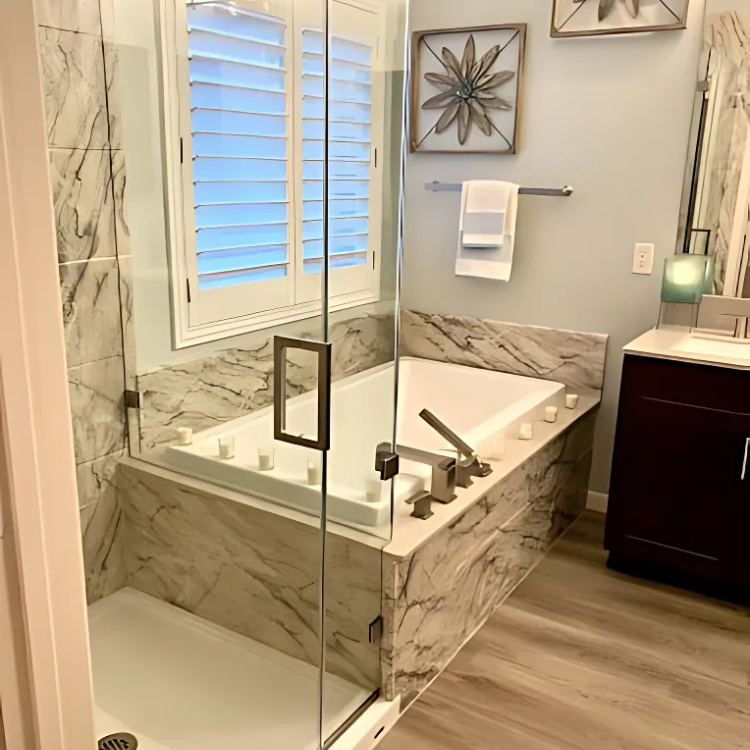
Weatherproof Shower Enclosures for Lasting Performance
On a humid August afternoon in Austin, a homeowner in Circle C noticed foggy edges and swelling trim around their shower. The glass was fine, but the enclosure was leaking just enough to soak into the walls. By the time they called Shower Doors of Austin, moisture had already begun to damage the framing behind the tile. The fix was no longer just a shower issue—it was a partial bathroom remodel.
Austin’s mix of heat, humidity, hard water, and sudden cold snaps is tough on bathrooms. A shower enclosure that isn’t thoughtfully designed and properly weatherproofed can lead to mold, warped trim, failing caulk, and cloudy glass far sooner than it should. On the other hand, a well-built, weather-resistant system can perform beautifully for 15–20 years or more.
This guide breaks down what “weatherproof” really means for indoor showers in Central Texas, how design and materials affect longevity, and what to look for in Custom Shower Glass and hardware so your enclosure stays tight, clear, and easy to maintain.
Key Insight: Lasting performance isn’t just about thick glass—it’s about the entire system: design, sealing, drainage, ventilation, and expert installation working together for the Austin climate.
Why “Weatherproof” Matters Indoors in Austin Bathrooms
At first glance, “weatherproof” sounds like something for patios and exteriors, not a shower inside your home. But your bathroom has its own micro‑climate—steam, temperature swings, overspray, and condensation all act like “weather” on your finishes every single day.
Austin’s climate amplifies that stress:
- Average summer humidity frequently sits above 70%
- Hard water leaves mineral deposits that break down seals faster
- Rapid temperature changes (cool AC interior vs. hot showers) expand and contract materials
“Moisture is relentless. It always finds the weak point in a system.” — Building Envelope Consultant, Central Texas
In a poorly designed or installed enclosure, that weak point is often:
- Gaps at the curb or corners
- Failed silicone at glass-to-tile joints
- Misaligned Frameless Shower Doors that drip outside the pan
- Inadequate slope on thresholds that lets water sit and seep
Real Austin example:
A Zilker-area homeowner called us about recurring mold at the base of their bathroom wall. The original builder-grade framed unit had a metal track that trapped water. Over time, rust and pinhole leaks allowed moisture under the tile. We replaced it with a frameless, low-profile design, re-sloped the curb, and re-sealed all joints. Two years later, the area remains dry and mold-free.
A weatherproof shower in Austin isn’t overkill; it’s preventive maintenance that protects your tile, framing, and air quality while keeping your bathroom looking new.
Design Choices That Make or Break Shower Longevity
The design stage is where you either set your shower up for long-term success—or future headaches. Glass thickness, door style, layout, and hardware all affect how well the enclosure handles daily moisture.
Choosing the right enclosure style
Each style manages water differently:
- Frameless hinged or Hinged Shower Doors
- Clean look, fewer metal parts to corrode
- Requires precise alignment and quality hinges to prevent leaks
- Sliding Shower Doors
- Great for tight spaces or tub-to-shower conversions
- Needs well-designed channels and weep holes so water doesn’t pool
- Corner and Neo Angle Shower Doors
- Maximize space in smaller Austin bungalows
- Extra attention needed at angled joints and thresholds
Layout and splash management
Thoughtful layout dramatically reduces water escape:
- Position shower heads away from door openings when possible
- Use fixed Custom Glass Panels to block direct spray
- Ensure curbs are properly sloped (¼” per foot) back into the pan
- Avoid micro-lips or flat spots that trap water along the curb
Case in point:
In a remodeled Travis Heights bungalow, the homeowner initially wanted a wide-opening pivot door centered on the curb. After walking the space, we shifted to a fixed panel plus a smaller pivot door on the drier side of the shower. This reduced direct spray at the door and allowed for a more reliable seal at the threshold—without compromising the open feel.
“Good shower design is part aesthetics, part physics.” — Lead Designer, Shower Doors of Austin
CALLOUT: A beautiful design that doesn’t control where water goes will always lead to extra maintenance and potential damage. Design for water first; aesthetics follow naturally.
Materials That Stand Up to Moisture, Minerals, and Time
The best layout in the world won’t last if the materials can’t handle Austin’s specific conditions: hard water, cleaning products, and daily use.
Glass quality and coatings
Most modern Glass Shower Doors use tempered safety glass, but not all glass is equal:
- High-quality tempered Custom Interior Glass resists thermal stress and impact better
- Factory-applied protective coatings help repel water and reduce mineral buildup
- Low-iron glass offers a clearer, less green appearance for high-end bathrooms
For Austin’s hard water, a protective coating is more than a luxury—it slows down etching and staining, which keeps the glass clearer and makes cleaning easier.
Hardware and seals
Look for:
- Solid brass or stainless steel hardware with corrosion-resistant finishes
- High-quality door sweeps and seals rated for repeated compression
- Mold-resistant silicone at all glass-to-tile and glass-to-stone joints
Real-world example
A Westlake client had a stunning frameless enclosure installed during a major remodel—but the contractor used bargain hardware and generic seals. Within three years, the hinges began to pit, and the bottom sweep hardened and cracked, leading to leaks. We upgraded to premium hinges, new seals, and mildew-resistant silicone without touching the glass. The enclosure is now performing like it should have from day one.
“Invest once in quality components, and your shower will thank you for years.” — Senior Installer, Shower Doors of Austin
Installation: Where Weatherproofing Succeeds or Fails
Even the best materials will underperform if the installation isn’t done to exacting standards. Weatherproofing is as much about craftsmanship as it is about product selection.
Key installation details that matter
- Plumb and level: Walls and curbs in older Austin homes are often out of square. Professional installers adjust hardware and glass to account for this, ensuring tight seals without stress on the glass.
- Proper anchoring: Using the right fasteners for tile, stone, or synthetic materials prevents loosening and moisture intrusion at anchor points.
- Strategic sealing: Not every joint should be sealed solid; some channels need weep paths to let water drain back into the shower.
“Over-sealing can be just as bad as under-sealing. Water always needs a path back to the drain.” — Field Supervisor, Central Texas
Austin case study
In a North Austin remodel, the homeowner had a semi-frameless enclosure installed by a non-specialist contractor. The glass looked level, but the curb was slightly pitched toward the bathroom. The installer compensated with extra silicone at the bottom of the door—temporarily. Over time, the heavy bead of silicone separated, and water began seeping out.
Our team:
- Removed the old silicone and hardware
- Installed a low-profile threshold piece with correct slope
- Rehung and realigned the door
- Resealed critical joints only, leaving drainage paths where needed
The fix was surgical and avoided ripping out tile, but it highlighted how crucial curb slope and correct sealing are in preventing chronic leaks.
CALLOUT: If your installer doesn’t talk about slope, weep paths, and joint strategy, you’re not getting true weatherproofing—just glass in a hole.
Comparing Traditional vs. Modern Shower Enclosure Approaches
Homeowners across Austin are replacing older, framed units with modern frameless or semi-frameless systems. Beyond looks, the upgrade often dramatically improves performance and ease of maintenance.
Performance and maintenance comparison
| Feature / Factor | Older Framed Units | Modern Frameless / Semi-Frameless Systems |
|---|---|---|
| Metal tracks and frames | Enclose glass edges; trap water and soap | Minimal metal; fewer places for water to sit |
| Cleaning effort | More scrubbing around frames and corners | Smoother surfaces, easier to squeegee and wipe |
| Aesthetic impact | Heavier, segmented look | Open, airy, showcases tile and stone |
| Customization options | Limited sizes and layouts | Extensive Custom Showers and configurations |
| Typical lifespan with good care | 8–12 years | 15–20+ years |
| Long-term cost of ownership (Austin) | More frequent replacement and repairs | Higher upfront, lower lifetime maintenance |
In an older home near Hyde Park, a client swapped a corroded framed unit for a frameless door and panel system. Their main goals were to reduce cleaning time and eliminate chronic mildew in the bottom tracks. One year later, they reported:
- Less visible soap scum buildup
- No recurring mold at the curb
- A brighter, more open-feeling bathroom
“Modern enclosures don’t just look better; they work better in real life.” — Austin Remodeler, 20+ years experience
Integrating Your Shower with the Rest of Your Glass Design
A weatherproof, high-performance shower often becomes the centerpiece of the bathroom—and it doesn’t have to stand alone. Coordinating glass throughout your home can create a cohesive, elevated look while maintaining durability.
Coordinated glass solutions
Shower Doors of Austin frequently designs suites that include:
- Bathroom Custom Mirrors that match the shower’s hardware finish and proportions
- Clear or frosted Cabinet Glass in vanities for a lighter, more modern feel
- Custom Glass Table Tops and shelving in adjacent dressing areas
- Stair and balcony Glass Railing Systems that echo the clean lines of your shower
Local example: from bathroom to whole-home glass
A client in the Mueller district started with a single request: a leak-free, frameless enclosure to replace a builder-grade tub/shower combo. After seeing the result, they asked us to:
- Add a full-width mirror above the double vanity
- Install floating Glass Shelving in a niche
- Design a small glass partition for a home office nearby
By keeping hardware finishes and glass style consistent, the entire home felt more cohesive—and every piece was specified with longevity and safety in mind.
“Glass is one of the few materials that can move from bathroom to living room to office without feeling out of place.” — Interior Designer, Central Austin
What This Means for Homeowners in Austin, TX
Austin’s housing stock is a mix of 1950s bungalows, 1980s subdivisions, and modern infill and high‑rise living. Each presents different challenges for water and humidity management—but the goals are the same: keep water where it belongs, protect your finishes, and make daily life easier.
For older homes in neighborhoods like Tarrytown or Brentwood, showers often sit on floors that have seen decades of shifting and settling. That means:
- Out-of-plumb walls that require custom glass and careful measurement
- Curbs that may need adjustment or replacement for proper slope
- Existing damage that must be addressed before a new enclosure goes in
In newer builds around areas like East Austin and the Domain, the issues are different:
- Builder-grade enclosures that prioritize speed over long-term performance
- Generic hardware that pits or fails quickly in Austin’s conditions
- Layouts designed for looks, not always for splash control
Your decision to invest in a weatherproof, well-designed enclosure has ripple effects:
- Lower maintenance: Less scrubbing, fewer repairs, and a cleaner-looking bathroom
- Healthier environment: Reduced mold and mildew risk, especially in tight, well-insulated homes
- Protected investment: Tile, stone, and framing last longer when they’re not constantly exposed to stray water
For many Austin homeowners, a high-quality shower enclosure is one of the most-used “fixtures” in the home. Treating it like a long-term investment rather than a commodity upgrade pays off in comfort, durability, and resale appeal.
Frequently Asked Questions
Q: How do I know if my current shower enclosure is failing or not properly weatherproofed?
A: Common warning signs include recurring mildew along the curb or baseboards, peeling or cracked caulk at glass edges, soft or swollen trim near the shower, and water pooling outside the enclosure after normal use. Foggy or etched Shower Door Glass can also indicate long-term hard water exposure without protective coatings. In Austin, where humidity is already high, even small leaks can quickly lead to bigger issues behind the tile. A professional assessment typically includes checking slope, seals, hardware condition, and glass alignment to determine whether repair or full Shower Door Replacement is the smarter option.
Q: Are frameless glass shower doors really less likely to leak than framed ones?
A: Properly designed and installed Frameless Glass Shower Doors can be just as watertight—and often more reliable—than older framed units. The key is controlling where the water goes through smart layout, correct curb slope, and high-quality sweeps and seals. Framed systems often rely on metal tracks that can trap water and eventually corrode or leak at corners. Frameless systems use fewer metal components and allow water to drain and surfaces to dry more quickly. In Austin, where mold and mildew are common concerns, the open design of frameless units can be a real advantage when paired with expert Shower Glass Installation.
Q: What’s the difference between frameless and semi-frameless, and which is better for Austin homes?
A: Frameless enclosures use thicker, structurally stronger glass with minimal metal, while semi-frameless units combine thicker glass doors with some framing around fixed panels. Semi-frameless can be a good middle ground for budget-conscious projects or specific layouts. For many Austin bathrooms, full frameless offers the best combination of performance, ease of cleaning, and aesthetics—especially in spaces where you want to highlight tile or stone. However, semi-frameless units can still be very effective when carefully designed and installed. The best choice depends on your layout, budget, and long-term goals. A site visit helps determine whether a frameless, semi-frameless, or even specialized Sliding Shower Doors system fits your space best.
Q: How long should a quality shower enclosure last in Austin’s climate?
A: With quality materials and professional Shower Door Installation, a frameless or well-built semi-frameless enclosure can easily last 15–20 years or more. The glass itself is rarely the limiting factor; hardware, seals, and the surrounding construction usually dictate lifespan. Austin’s hard water can shorten that timeline if glass isn’t protected and maintained, and if inferior hardware is used. Simple habits—like squeegeeing after showers, using gentle cleaners, and re-caulking as needed—can significantly extend the life of your enclosure. During a consultation, we can estimate the realistic lifespan of your current or proposed system based on your home’s specific conditions.
Q: I’m remodeling my bathroom. Should I choose the tile first or the glass enclosure design?
A: Ideally, you should consider both together. Tile layout, curb design, and niche placement all affect how your Custom Shower Doors will function. For example, a beautifully tiled curb that’s perfectly flat but not sloped toward the drain will cause long-term water issues, no matter how nice the glass is. We often work with Austin homeowners and designers early in the remodel process to coordinate tile dimensions, curb height, and door swing or slide direction. That way, the finished shower looks seamless and performs well. If your tile is already installed, we can still create a tailored Bathroom Glass Enclosure, but early collaboration usually leads to the best results.
Q: Are custom shower enclosures worth it compared to standard, off-the-shelf kits?
A: In many Austin homes, especially older ones, walls are out of square and dimensions don’t match stock kit sizes. Off-the-shelf units may require awkward fillers, extra framing, or compromises in layout that can increase the risk of leaks and make cleaning harder. A custom enclosure is measured and fabricated specifically for your space, accounting for slopes, angles, and unique features. While the upfront cost is higher, you gain a better seal, cleaner lines, and more design flexibility—plus fewer headaches over time. For homeowners already investing in quality tile, stone, or a full remodel, a custom solution usually aligns better with the level of finish and long-term expectations.
Q: Can you match my shower glass to other glass features in my home, like a wine room or office partition?
A: Yes. Many Austin homeowners want a consistent glass aesthetic across multiple spaces. We frequently coordinate shower glass with Custom Wine Rooms, Door Glass, and Custom Etched Glass panels elsewhere in the home. Matching glass thickness, edge profiles, and hardware finishes helps create a cohesive, high-end look. For example, a client in the Hills installed a frameless shower, a glass office partition, and a glass railing on the staircase, all using similar hardware and glass style. The result felt intentional and elevated, without sacrificing the durability and safety each application required.
Ready to Get Started?
Austin’s climate isn’t gentle on bathrooms, and a “good enough” shower enclosure can quietly create problems behind the scenes. If you’re seeing leaks, mildew, or just tired, dated glass, this is the ideal time to plan a weatherproof upgrade—especially before peak humidity and summer usage put extra stress on your bathroom.
Shower Doors of Austin specializes in designing and installing high-performance, custom Shower Enclosures tailored to Central Texas homes. From precise measurement and layout advice to carefully selected hardware and meticulous sealing, every step is focused on long-term durability as well as beauty.
Next steps are simple:
- Schedule a consultation and on-site evaluation
- Review design options, glass types, and hardware finishes
- Receive a clear proposal with timeline and pricing
With years of experience in Austin, a portfolio of local projects, and a focus on code-compliant, safety-first installations, our team is ready to help you build a shower that looks stunning and performs day after day.
About Shower Doors of Austin
Shower Doors of Austin is a locally focused glass specialist serving homeowners, builders, and designers across the greater Austin area. Our team has decades of combined experience in Custom Showers, interior glass, and architectural glazing, with a reputation for precise craftsmanship and dependable service. From frameless enclosures and Custom Mirrors to glass railings and specialty installations, we bring deep product knowledge and a detail-oriented approach to every project.