
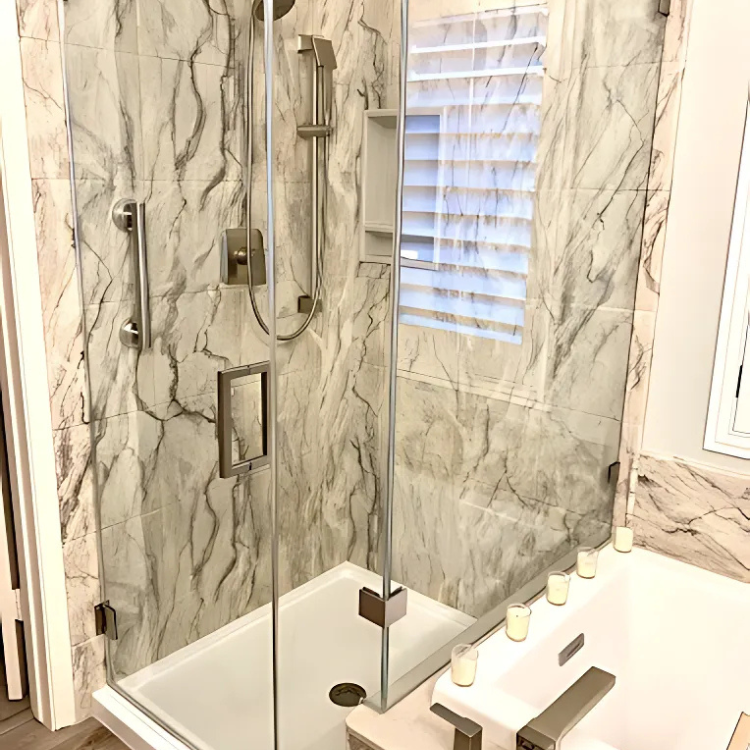
Shower Enclosures Engineered for Consistent Containment
If you’ve ever stepped out of a “luxury” shower onto a soaked bath mat, you know how fast a beautiful bathroom can start to feel like a problem. In Austin’s mix of older homes and new construction, we see it all the time: gorgeous tile work, trendy glass, and then… water creeping under the threshold, pooling near cabinets, and slowly damaging trim and subfloors.
Nationally, the average bathroom leak can cost $1,000–$3,000 to repair once you factor in flooring, drywall, and mold remediation. In Austin, where many homes are slab-on-grade and humidity is high, that damage can spread even faster.
This is why containment—keeping water where it belongs—is just as important as style. At Shower Doors of Austin, we engineer shower enclosures around consistent, predictable water control, not guesswork.
You’ll learn how modern Custom Shower Glass systems are designed to contain water, what separates a well-engineered enclosure from a leaky one, and how to choose the right solution for your Austin home or project—without sacrificing the clean, frameless look you want.
Key Insight: Thoughtful engineering, not extra metal or heavy caulking, is what keeps a beautiful shower dry and damage-free year after year.
Why Containment Matters More in Austin Bathrooms
Austin’s housing stock is a blend of mid-century ranch homes, downtown condos, and Hill Country custom builds. They all share one thing: water damage is expensive and disruptive here.
The local reality of “just a little water”
A homeowner in Circle C recently called us after noticing soft baseboards outside their walk-in shower. The glass looked fine. The tile was immaculate. But the original shower glass had been installed with minimal attention to slope and door swing. Water slipped past the poorly placed sweep with every shower.
By the time we arrived:
- The MDF baseboards had swelled and warped
- The bottom of the vanity cabinet was stained and soft
- Mold had begun forming behind the trim
What started as “a small drip” turned into partial demolition and replacement—far more than the cost of a properly engineered enclosure from the start.
“Most leaks we see aren’t dramatic failures. They’re tiny, repeatable escapes of water that add up over months and years.” — Senior Installer, Shower Doors of Austin
Why Austin homes are especially vulnerable
Several local factors make containment crucial:
- High humidity accelerates mold growth in damp areas
- Slab foundations often hide early-stage water migration
- High-end finishes (natural stone, custom cabinets) are less forgiving of moisture
- Open-concept bathrooms mean water can travel farther if not contained
A well-engineered shower enclosure doesn’t just look good; it protects the rest of your bathroom, your air quality, and your long-term investment.
The Engineering Behind a Truly Contained Shower Enclosure
Containment is not about sealing everything in silicone. It’s about controlling where water goes through a combination of glass layout, hardware, and site conditions.
Key design elements that prevent leaks
We look at every potential escape path and design against it:
- Floor and curb slope
Water should naturally run back toward the drain. Even the best Frameless Shower Doors can’t overcome a flat or reverse-sloped curb.
- Door position and swing
Hinged or Pivot Shower Doors must clear adjacent walls and vanities while aligning with the wettest area of the shower, not the driest.
- Glass-to-wall intersections
Properly aligned panels and tight, straight walls mean seals work as intended instead of being over-compressed or gapped.
- Hardware and seals
Bottom sweeps, vertical seals, and thresholds are chosen and cut to work as a system—not as afterthoughts.
Case study: downtown condo with chronic leaks
A condo off Rainey Street had a sleek, minimalistic enclosure that looked like something from a magazine, but the owner was constantly mopping water from the bathroom floor.
We found three engineering problems:
- The fixed panel ended too far from the shower head
- The curb had almost no slope
- The door sweep didn’t fully contact the curb along its length
We replaced the system with a new Shower Enclosures layout, extended the fixed glass panel, and adjusted hardware placement and sweeps. Without adding bulky framing, the leaking stopped immediately, and the owner kept the airy aesthetic they loved.
CALLOUT: A beautiful shower can still leak. A properly engineered shower is designed, piece by piece, to control water flow.
Frameless vs. Semi-Frameless vs. Sliding: Which Contains Water Best?
Style matters, but so does performance. Different door types handle water differently, especially in Austin’s variety of bathroom layouts.
How the main options compare
Below is a general performance comparison for a typical Austin bathroom with a standard curb and shower head configuration:
| Feature / Priority | Frameless Hinged Door | Semi-Frameless Door | Sliding Shower Doors |
|---|---|---|---|
| Water Containment | Excellent when engineered correctly | Very good, more margin for error | Very good, especially in tub/shower combos |
| Aesthetic / Openness | Highest (minimal hardware) | Moderate (some framing visible) | High, but with top track |
| Typical Cost in Austin | $$$ (custom, premium hardware) | $$ (mid-range) | $$–$$$ (varies with size and hardware) |
| Ideal Use Case | Walk-in, custom showers | Standard openings, budget-conscious | Tight bathrooms, tub/shower combos |
| Maintenance | Low, occasional seal/sweep refresh | Low–moderate | Moderate (track cleaning) |
Matching door type to your bathroom
- Frameless hinged or pivot doors
Best for custom layouts, spa-style showers, and open bathrooms where you want uninterrupted glass. With proper planning, they offer excellent containment without heavy framing.
- Semi-frameless shower doors
A good choice when you want better containment and stability at a slightly lower price point. They use minimal framing at edges and can be more forgiving of out-of-plumb walls.
- Sliding shower doors
Ideal where swing space is limited, such as smaller Central Austin bungalows or guest baths. Modern systems glide smoothly and, when correctly overlapped, do a solid job of keeping water in.
A Westlake homeowner recently upgraded from a builder-grade framed slider to a custom, low-profile Sliding Shower Doors system. With better overlap and a more substantial bottom guide, the chronic drip along the tub edge disappeared—and the bathroom felt larger thanks to cleaner lines.
“Choosing the right door type is 50% style, 50% physics. The wrong match will fight your bathroom instead of working with it.” — Lead Designer, Shower Doors of Austin
Custom Shower Glass: Precision Containment for Unique Layouts
Austin homes are full of design character: angled ceilings, corner tubs converted into showers, and open wet-room concepts. Off-the-shelf glass rarely fits these spaces perfectly—and any compromise in fit is an opportunity for water to escape.
Why custom matters for consistent containment
With Custom Shower Glass, every panel is measured to the fractions of an inch to match your actual walls, floors, and angles. That precision does more than look good:
- Minimizes gaps at walls and curbs
- Aligns hardware exactly where it needs to be for best performance
- Allows for taller panels to better control overspray
- Accommodates benches, niches, and half-walls without odd transitions
Real-world example: Barton Hills corner shower
A Barton Hills homeowner converted a dark, enclosed shower into a bright corner shower with two glass walls. The initial plan used standard sizes and angles, which left a noticeable gap along one wall and an awkward angle at the curb.
We redesigned using Custom Shower Glass:
- Adjusted panel sizes to follow the true wall lines
- Used a precise miter at the corner joint
- Sized the door to maximize opening while maintaining overlap with the wet zone
The final result: no leaks, a wider entry, and a clean, gallery-like feel that showcased their tile and fixtures—without a single unnecessary metal frame.
CALLOUT: Custom glass isn’t just about aesthetics; it’s the difference between a “good enough” fit and a system engineered to contain water for the life of your bathroom.
Beyond the Shower: Coordinated Glass That Works Together
A bathroom is a system, not a collection of parts. The way your shower enclosure interacts with mirrors, shelving, and nearby glass can either support or undermine containment and usability.
Integrated glass solutions in the bathroom
Thoughtful planning often includes:
- A large, properly sized Custom Mirrors above the vanity to reflect light from the shower area
- Glass shelving or Custom Interior Glass partitions that don’t interfere with door swing or splash zones
- Cabinet glass that’s positioned away from recurring moisture
- Glass wall panels or partial dividers that contain spray in open-plan baths
A remodel in Tarrytown paired a frameless corner shower with a full-width mirror and a short glass partition near a freestanding tub. By coordinating all the glass at once, we:
- Ensured the shower door cleared the vanity and mirror edges
- Positioned the partition to block stray spray from the shower
- Kept moisture away from the custom wood vanity and Cabinet Glass
The bathroom feels open and modern, but water stays exactly where it’s supposed to.
“Glass is one of the few materials that can define space without closing it off. When designed thoughtfully, it can control water and light at the same time.” — Project Coordinator, Shower Doors of Austin
The Installation Difference: Why Technique Is as Important as Design
Even the best-designed enclosure can fail if the installation cuts corners. Containment is achieved on-site—where real-world conditions meet the plan on paper.
What professional installation looks like
Our team approaches every shower installation as a technical project, not just a cosmetic one:
- Comprehensive site review
We check curb slope, drain placement, tile alignment, and wall conditions. If something will compromise containment, we flag it before glass is ordered.
- Precise measuring and templating
We account for out-of-square corners, varying heights, and unusual details like benches or knee walls.
- Hardware placement for performance
Hinges, clips, and handles aren’t just “lined up.” They’re positioned to support both structural integrity and water control.
- Sealants and sweeps used strategically
Silicone is used where it should be—and avoided where it would trap water or cause long-term discoloration.
Example: fixing a “new” shower in a new build
In a newer subdivision in Pflugerville, a homeowner called just months after move-in. Their frameless enclosure looked modern, but during showers, water streamed along the curb and out near the bathroom door.
We discovered:
- The curb sloped slightly outward
- The bottom sweep had been cut too short
- The door hinged in a way that directed splashes toward the opening
We re-tuned the system with a new sweep, adjusted hinge position, and installed a low-profile threshold that worked with the existing tile. While we couldn’t change the original curb slope without major work, we engineered around it to dramatically reduce water escape.
CALLOUT: A properly installed enclosure is quiet, smooth to operate, and keeps water inside without relying on thick beads of caulk as a last resort.
What This Means for Homeowners in Austin, TX
For Austin homeowners, containment is not a luxury—it’s insurance for everything else you’ve invested in your bathroom.
Why this is especially important here
- Many remodels feature natural stone and custom cabinetry, both highly susceptible to water damage.
- Our humid climate makes any recurring dampness a potential mold issue.
- With rising home values across Austin, a poorly performing shower can noticeably impact resale appeal and inspection results.
Proactive, engineered containment helps you:
- Protect flooring, trim, and cabinetry from slow, hidden damage
- Reduce the chance of mold growth behind walls and under vanities
- Keep maintenance simple—no daily mopping around the shower
- Preserve the “new bathroom” look for years longer
We often see Austin homeowners spend generously on tile, fixtures, and lighting, only to treat the glass as an afterthought. Yet the enclosure is what you interact with every day. It’s also the component most responsible for where water goes.
Choosing a well-designed, professionally installed glass system—whether that’s Frameless Glass Shower Doors, a semi-frameless setup, or a sliding configuration—means your bathroom not only looks high-end but functions that way, too.
Ultimately, a shower that contains water consistently is quieter, cleaner, and more relaxing. You’re not thinking about towels on the floor or swollen baseboards—you’re simply enjoying the space you invested in.
Frequently Asked Questions
Q: How do I know if my current shower enclosure has a containment problem?
A: The most obvious sign is water outside the shower area after normal use—especially if it appears in the same spots each time. Look for consistently damp bath mats, swollen baseboards, discoloration at the bottom of nearby walls, or fogging inside adjacent Cabinet Glass. In Austin’s climate, even small leaks can lead to mold, so it’s worth investigating early. A quick inspection by a professional can identify whether the issue is door alignment, worn sweeps, poor design, or something else. In many cases, targeted adjustments or Shower Door Replacement can dramatically improve containment without a full remodel.
Q: Are frameless shower doors more likely to leak than framed doors?
A: Not if they’re engineered and installed correctly. Modern Frameless Shower Doors use thicker glass, precise hardware, and strategic seals to control water without bulky frames. Problems usually stem from poor planning—like incorrect door placement, inadequate panel size, or improper curb slope—not from the frameless concept itself. In Austin, we routinely install frameless systems that outperform older framed enclosures in both appearance and containment. The key is to treat the project as a custom fit to your space, not a one-size-fits-all kit.
Q: Can I improve water containment without replacing my entire shower enclosure?
A: In some cases, yes. If your glass and layout are basically sound, adjustments like replacing worn sweeps, adding or upgrading seals, or re-aligning a Hinged Shower Doors can make a noticeable difference. We also sometimes add low-profile thresholds or adjust door swing where possible. However, if the core design is flawed—like a door opening directly into the spray zone or a fixed panel that’s too short—partial fixes may only help so much. During a visit, we can tell you honestly whether a tune-up or a new Bathroom Glass Enclosures system is the better long-term solution.
Q: How long does a custom shower glass installation typically take in Austin?
A: The process has two main phases. First, we measure and design your enclosure, which usually takes a single visit. Fabrication of Custom Shower Glass typically takes 7–14 business days, depending on complexity and current demand. Installation itself usually takes a few hours for a standard enclosure and up to a full day for more complex systems. In Austin’s busy remodeling market, scheduling early—especially during spring and fall—is wise. We coordinate with your contractor or tile installer to ensure the glass goes in at the right time so you’re not left waiting with a finished shower and no door.
Q: Are there specific glass or hardware options you recommend for Austin’s humidity?
A: We generally recommend tempered Custom Glass Panels with high-quality hardware designed for wet environments. Many homeowners opt for optional protective coatings that make glass easier to clean and minimize mineral buildup from Austin’s hard water. For hardware, we use corrosion-resistant finishes and components rated for long-term use in showers. Thoughtful ventilation design is also important—sometimes we recommend leaving strategic gaps at the top of enclosures to allow steam to escape, especially in smaller baths. All of these choices support both containment and long-term durability in our climate.
Q: How do custom shower enclosures compare in cost to standard units?
A: Custom enclosures in Austin typically cost more up front than off-the-shelf units, but they deliver a better fit, better performance, and a more integrated look with your tile and fixtures. A standard, mass-produced unit might save money initially but can introduce compromises—gaps, awkward hardware placement, or poor containment—that lead to higher maintenance or even water damage over time. With Custom Showers, you’re paying for precise measurement, tailored glass, and engineered hardware placement. For many homeowners, that added investment pays off in daily comfort, reduced risk, and improved resale value.
Q: Can my shower glass be coordinated with other glass in my home?
A: Absolutely. Many Austin clients choose to coordinate finishes and styles across multiple glass features. For example, we might match the hardware on your Glass Shower Doors with the brackets on your Custom Glass Table Tops, or echo the lines of your shower enclosure in Stair Rail Glass or a Custom Wine Rooms enclosure. We can even incorporate Custom Etched Glass elements that carry a consistent pattern or logo throughout your home. Coordinating these elements creates a cohesive, high-end feel while still ensuring every piece is engineered for its specific function.
Ready to Get Started?
If you’re living with a leaky, dated, or underperforming shower, you don’t have to keep working around it with extra towels and bath mats. A properly engineered enclosure can transform your daily routine—cleaner floors, less maintenance, and a bathroom that finally functions as beautifully as it looks.
Austin’s remodeling calendar fills quickly, especially in prime seasons, and glass fabrication lead times can extend when demand is high. Starting now means you’re more likely to get your preferred timeline and finish your project before the next wave of humidity or holiday guests arrives.
The next step is simple: schedule a consultation. We’ll evaluate your current setup, discuss options—from fully Frameless Glass Shower Doors to tailored Corner Shower Enclosures or Sliding Shower Doors—and provide a clear, detailed plan.
Shower Doors of Austin has spent years working exclusively with glass in Central Texas homes. Our team understands local construction methods, common problem areas, and what it takes to keep water exactly where it belongs.
Take the first step toward a drier, safer, and more enjoyable bathroom.
About Shower Doors of Austin
Shower Doors of Austin specializes in custom glass solutions for homes throughout the Austin, TX area, from precision-engineered shower enclosures to Custom Mirrors, Door Glass, and more. Our team combines technical expertise with a design-focused approach, ensuring every project delivers both performance and visual impact. With years of experience in Central Texas construction and remodeling, we’re trusted by homeowners, builders, and designers who expect high-quality workmanship and dependable service. Learn more about our work and services at Shower Doors of Austin.